role: strategist, art director, copywriter
category: waste treatment
year: 2021
category: waste treatment
year: 2021
context
In ultra-luxury markets such as Sylt, visibility no longer supports value. For high-net-worth clients, exposure introduces social friction, security concerns, and symbolic devaluation. Traditional branding tools—renders, iconic forms, expressive identities—increase the risk of status erosion rather than reinforcing prestige. The problem is not how to add value, but how to avoid damaging it through communication.

Stealth House reframes the developer’s role from a provider of square meters to a curator of sovereign space.
concept
Stealth House treats real estate not as a visual statement, but as a protected condition. The project shifts focus from representation to exposure management. Architecture and branding do not seek recognition; they regulate access. Status is preserved by controlling what is revealed, to whom, and under which circumstances. Non-demonstration is not an aesthetic choice, but a protective strategy.
system logic
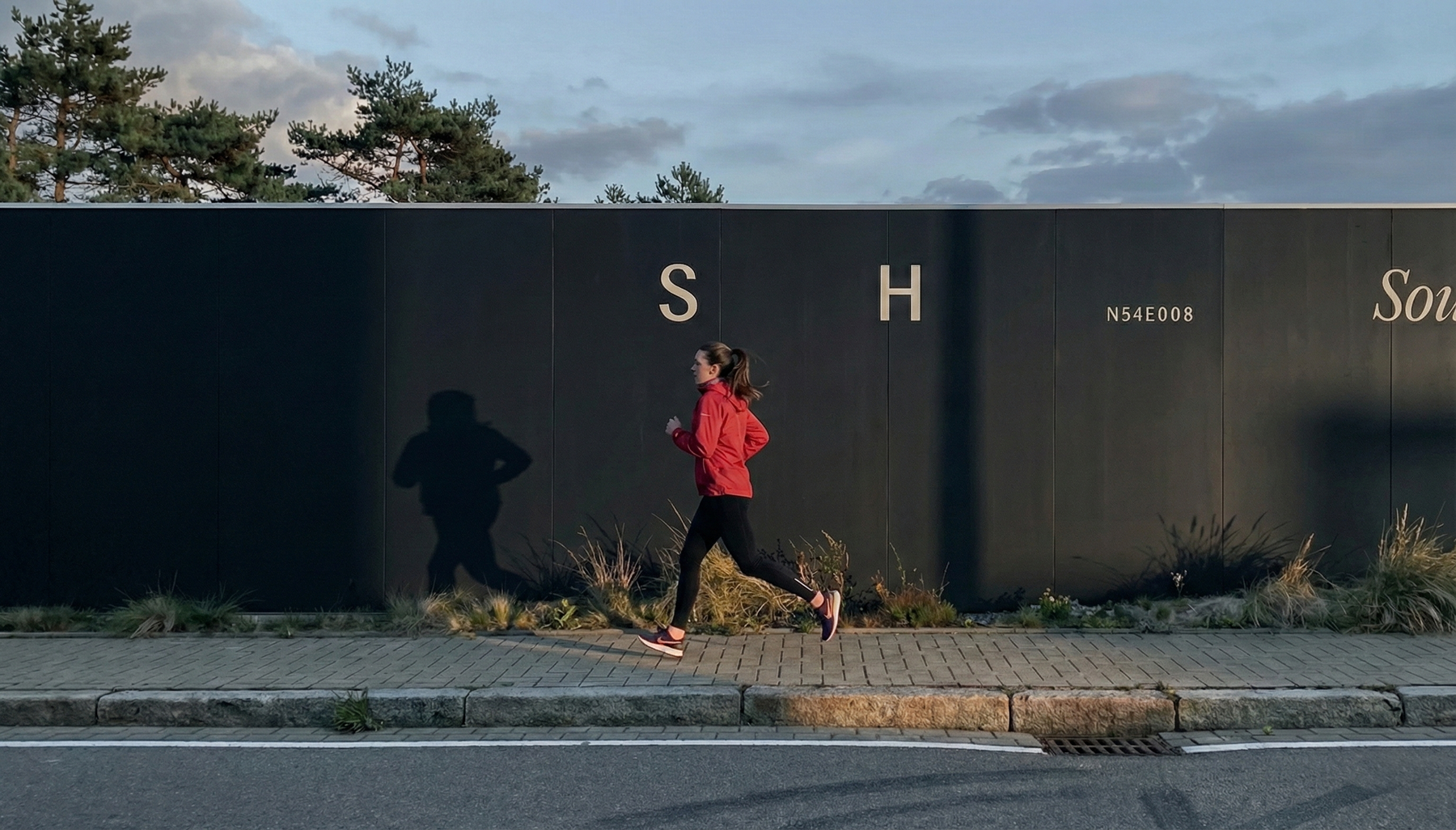
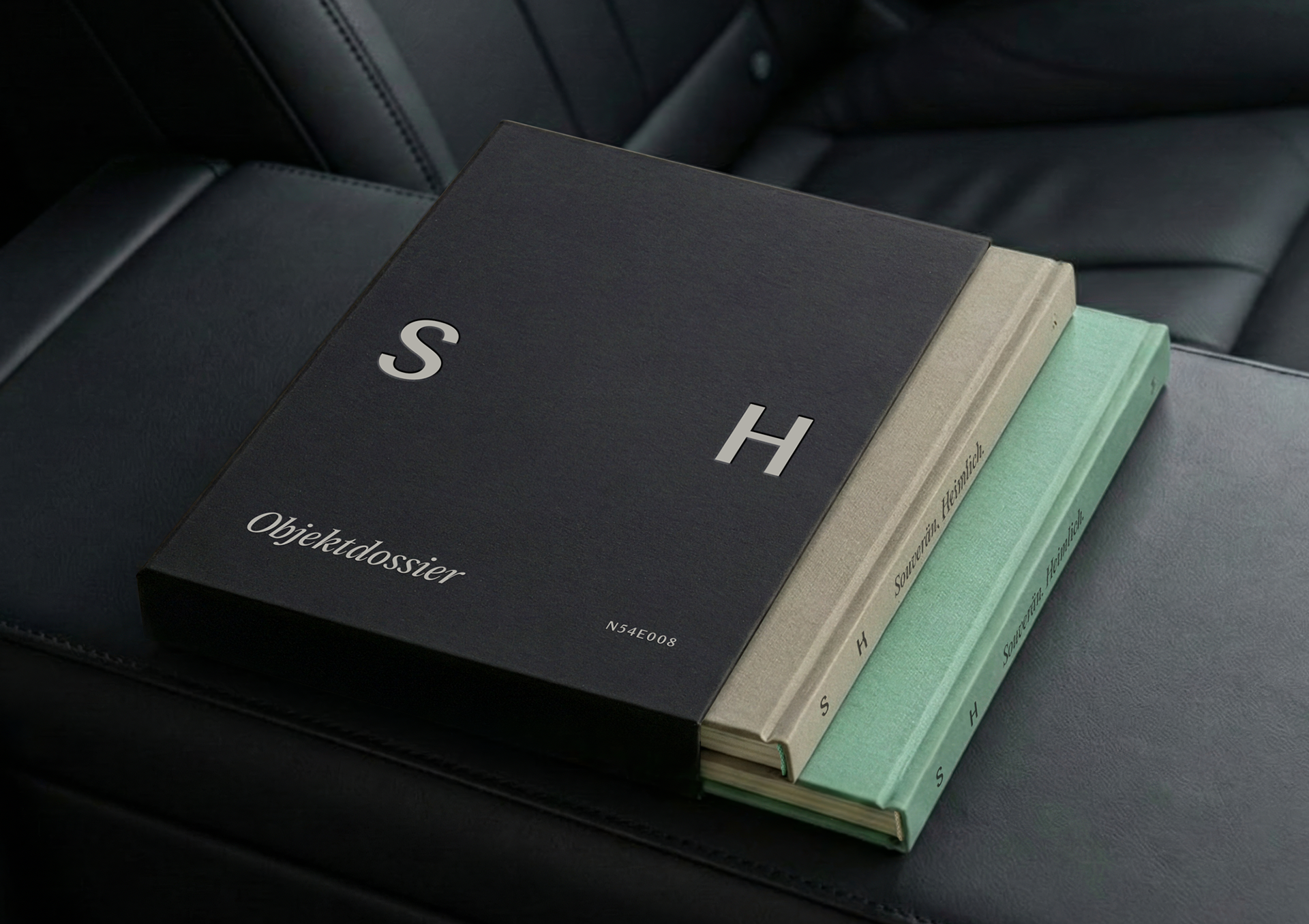
The system operates through controlled disclosure. All public communication removes architectural representation: no renders on fences, no visual previews in the sales office, no imagery that describes the house as an object. The name is reduced to the abbreviation “S H,” deliberately separated to create a physical gap. Alongside it appears a coordinate marker (N54E008), functioning as a precise but non-explanatory reference. Together, the abbreviation and the coordinates act as a closed code: they confirm existence and location without revealing form.
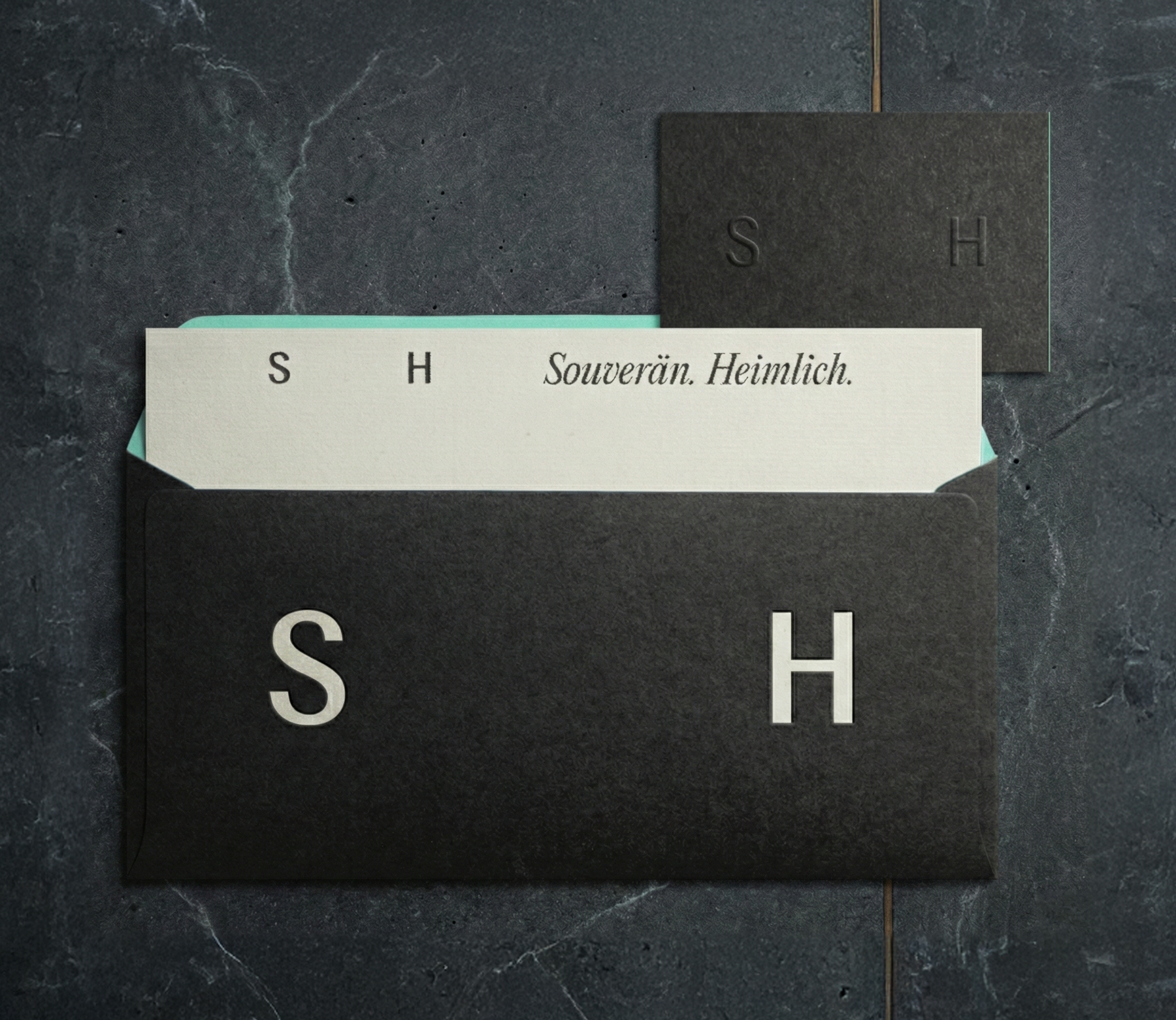
Full information is displaced into non-public formats—folders, dossiers, internal materials—while the public layer is limited to surfaces, materials, letters, and data. The system does not invite interpretation; it establishes an access rule. Presence is verified through code, visibility is withheld by default, and understanding is reserved for those who already know where to look.
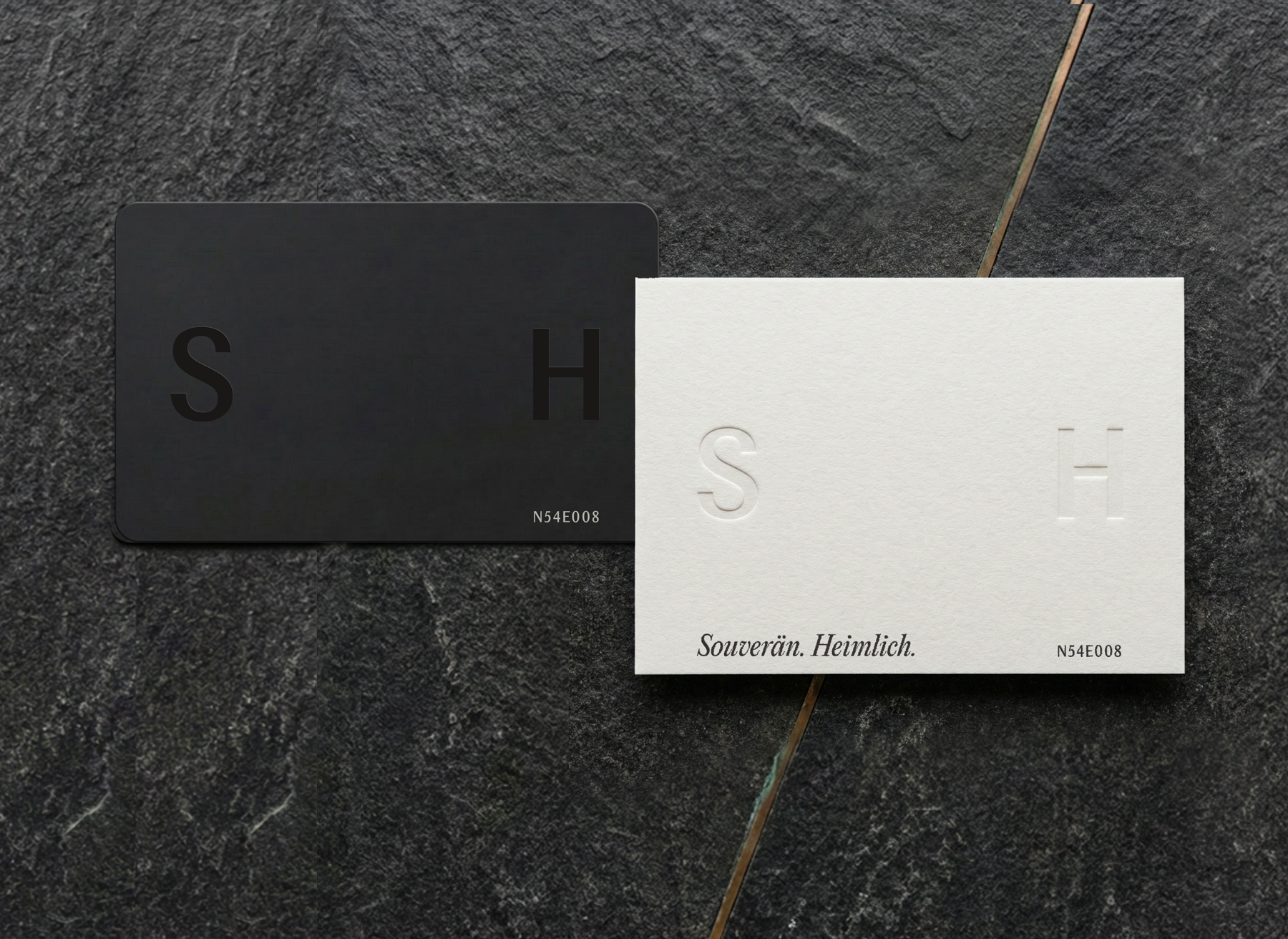
value
Stealth House provides agencies and developers with a clear framework for operating in high-privacy contexts. It prevents over-communication, protects client anonymity, and maintains long-term status stability. Instead of increasing desirability through display, the project sustains prestige by minimizing the risk of symbolic and social degradation.