I plug in after the strategy is defined and before production begins, before decisions become expensive. I build the conceptual framework that allows the work to hold, scale, and survive execution, even for briefs like these:

To grow in a climate of conservative consumption, a waste treatment company must position itself not only as an operator of recycling technologies but as an ambassador of a shift in collective consciousness. I aimed to create a brand that communicates this mission from within.

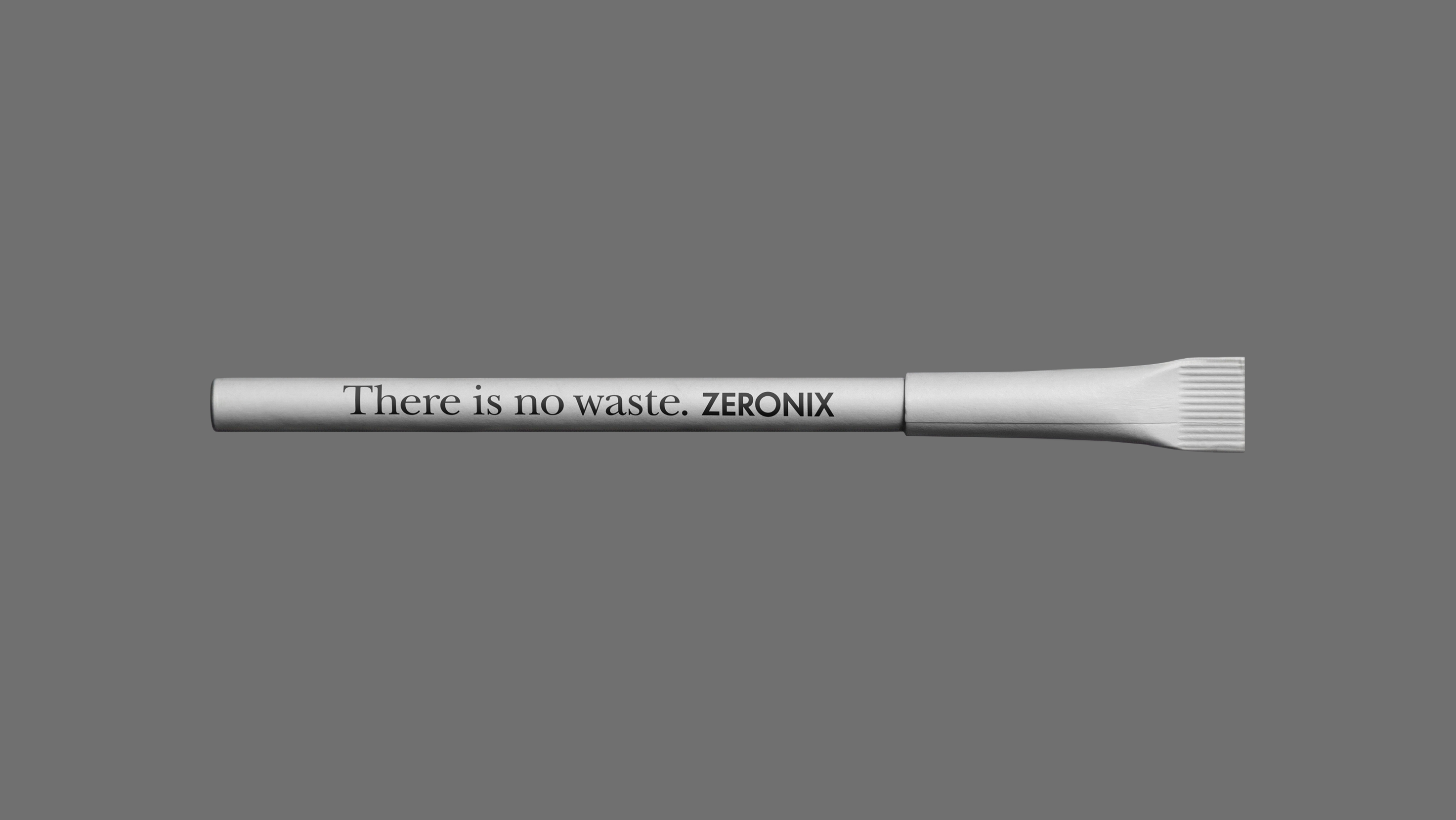
The world is no longer infinite. Survival depends on redefinition. In a closed system, nothing is worthless — everything has a place. In a world that no longer has room for garbage everything is accounted for. ZERO waste: it is what the true ecological balance looks like. The concept was built around the slogan There is no waste, both verbal and visual centerpiece of the brand’s communication.

The concept is built on radical reduction. The visual system relies exclusively on restrained color, typography, and black or white backgrounds, eliminating all non-essential elements. Eco-friendly materials are used as an integral part of the design, reinforcing the idea that sustainability is not an aesthetic layer, but the foundation of the brand’s thinking.


The project formed a radical, easily recognizable system that breaks with established visual habits and invites a reconsideration of consumption and responsibility. The lack of an initial strategy was mitigated by developing a proxy strategy, and the need for a new mindset was addressed through an identity design that is inherently communicative, using a slogan as an integral part of the brand’s core.


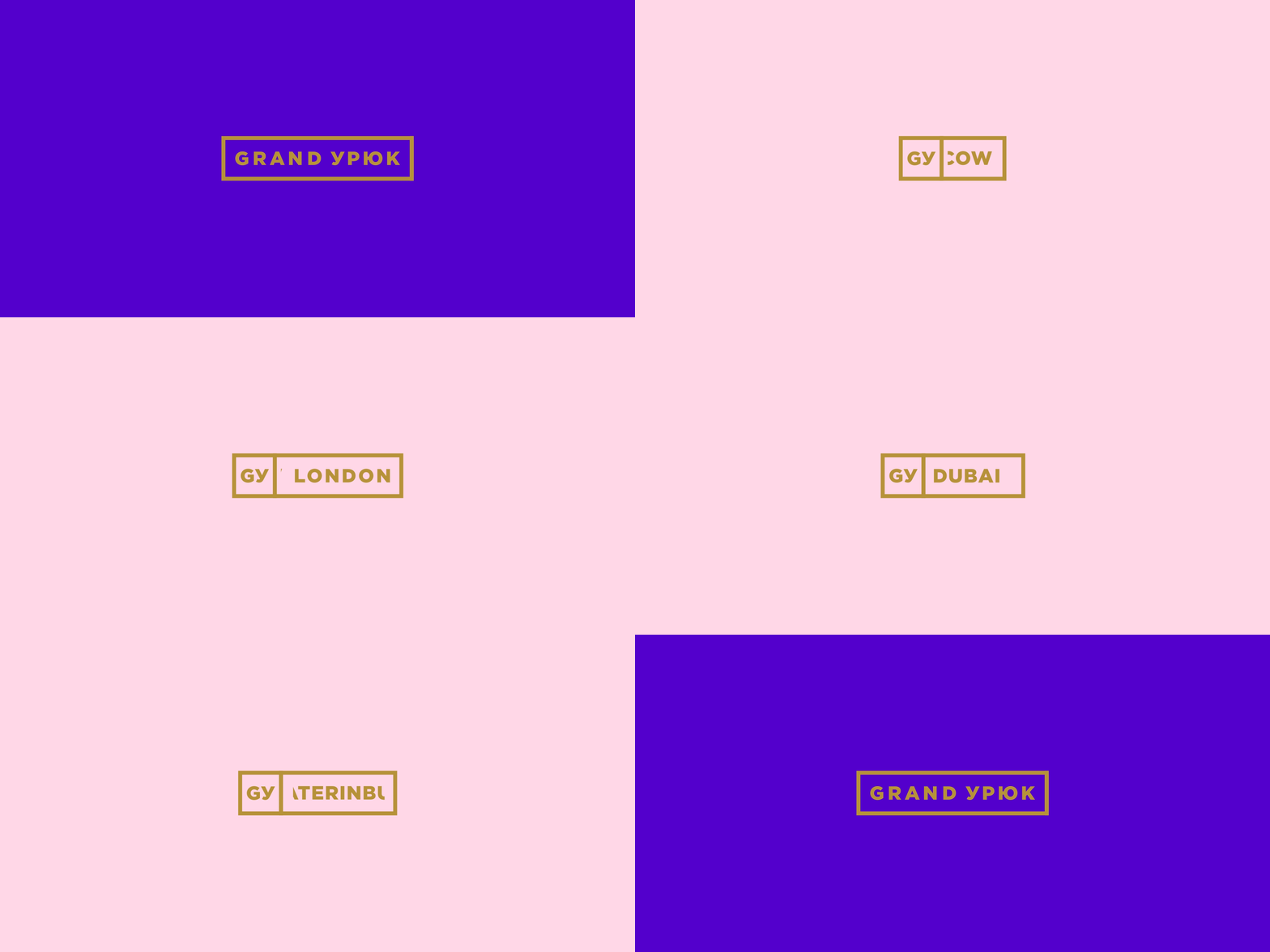
The Urük restaurant network operated for years as a closed insider ecosystem: private rooms, heavy carpets, deals made over food. It was defined by tradition, privacy, and informal power. Then the audience changed. A younger, wealthier crowd emerged—drawn to nightlife, contemporary art, and provocation. In this context, “ethnic authenticity” became a liability. The business faced a hard truth: it could not evolve gradually. To survive, it had to erase its category and exit it completely.

To change the audience overnight, we replaced hospitality with a calculated provocation. The Golden Apricot was designed with deliberate anatomical ambiguity, balancing between fruit and human form. This was not a joke. It was a filter. The visual glitch repelled the conservative old guard while attracting a new audience fluent in irony and art codes. The object did not represent the brand—it selected its future users.


Provocation alone would have been vulgar. To make it expensive, we engineered contrast. The object is hot, golden, fleshy, and dominant. The system around it is cold, sterile, and disciplined. A strict Swiss grid and monochrome typography act like gallery walls. This framework sanitizes the shock, elevating it from scandal to art. The brand can be loud without losing control.

The strategy broke the brand’s connection to its past. Grand Urük stopped competing with restaurants and started competing with galleries and nightlife venues. The ambiguity generated massive organic reach because it demanded interpretation. The identity did not decorate the space—it worked as a social elevator, moving the business out of an ethnic niche and into the city’s attention economy.


The idea of a "full-service agency" has become a problem. Clients no longer trust agencies that claim to do everything; they prefer specialists. At the same time, the nature of creative work is shifting. AI and new tools are changing workflows faster than agencies can adapt. Oktopods faced a practical question: how to keep the operational strength of a large, integrated agency while appearing focused, precise, and relevant?

The solution was not to hide complexity, but to organize it. We designed Oktopods as one organization with eight interfaces. Instead of presenting itself as a generalist, the agency speaks through eight clearly defined specializations. Each one has its own role and behavior, while the central brand holds everything together. This makes the structure easy to understand: one mind, multiple expert points of contact.

The system functions as a biological cluster. The Foundation: Eight black "ink drops." Each drop represents a specific agency superpower (Strategy, Design, Code, etc.). The Behavior: While the core structure (the 8) remains rigid, the individual drops are fluid. They act as adaptive containers that can hold any texture, image, or message. They can shift, merge, and expand, adapting to any medium without breaking the structural integrity of the whole.


The brand helped Oktopods reposition itself clearly. Clients see a focused expert, not an unfocused generalist. Internally, teams understand how they fit into a larger structure. The identity works as a coordination tool. It supports change instead of resisting it, staying relevant even as tools, markets, and workflows continue to shift.


Mass-market real estate is powered by verbal communication: big headlines, big type, short slogans across outdoor, print, and sales formats. In most identity systems this creates a constant conflict: the message wants the whole surface, while the brand elements (logo blocks, badges, layout signatures) demand their own territory. Under real rollout pressure, these layers start fighting each other, and the identity becomes inconsistent from format to format. The task was to remove this structural conflict and make scaling safe.

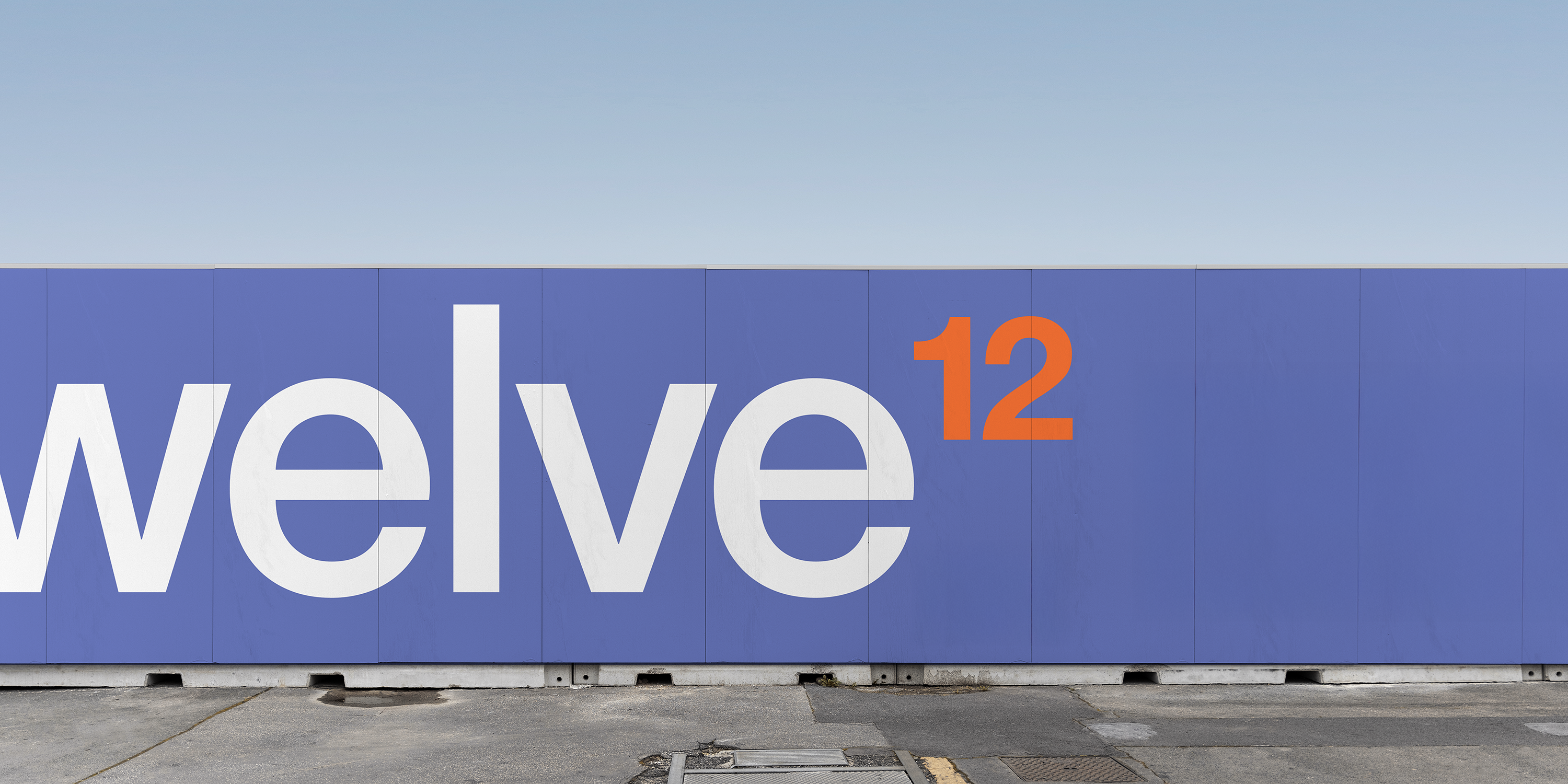
The system resolves the conflict by collapsing two layers into one. Instead of forcing messages to “fit around” branding, branding is built into the message. The address number 12 becomes an index that attaches to key words, so the headline itself carries identity: Home¹², Project¹², Twelve¹². Once the message is the mark, the need to “place the logo” stops being a daily production problem.

A high-performance identity system for residential real estate, engineered as a production machine for urban scale.

The identity works as a writing rule, not a layout trick. The index is applied at character level, so it survives across any surface where text survives. Because the brand is inside the headline, the system frees the composition: large type can dominate without competing with a separate logo layer. Typography then dictates structure automatically: type size sets the index size, which sets spacing and rhythm, keeping output consistent even when different vendors execute it.

This creates production freedom without losing control. Copy can be loud and large, as outdoor requires, while the brand remains present without additional graphic weight. The rollout becomes faster, simpler, and more reliable: fewer elements to coordinate, fewer collisions, fewer mistakes. The identity stays recognizable across formats because it is carried by the one thing that always exists in this category—the message.

In ultra-luxury markets such as Sylt, visibility no longer supports value. For high-net-worth clients, exposure introduces social friction, security concerns, and symbolic devaluation. Traditional branding tools—renders, iconic forms, expressive identities—increase the risk of status erosion rather than reinforcing prestige. The problem is not how to add value, but how to avoid damaging it through communication.

Stealth House treats real estate not as a visual statement, but as a protected condition. The project shifts focus from representation to exposure management. Architecture and branding do not seek recognition; they regulate access. Status is preserved by controlling what is revealed, to whom, and under which circumstances. Non-demonstration is not an aesthetic choice, but a protective strategy.

The system operates through controlled disclosure. All public communication removes architectural representation: no renders on fences, no visual previews in the sales office, no imagery that describes the house as an object. The name is reduced to the abbreviation “S H,” deliberately separated to create a physical gap. Alongside it appears a coordinate marker (N54E008), functioning as a precise but non-explanatory reference. Together, the abbreviation and the coordinates act as a closed code: they confirm existence and location without revealing form.

Full information is displaced into non-public formats—folders, dossiers, internal materials—while the public layer is limited to surfaces, materials, letters, and data. The system does not invite interpretation; it establishes an access rule. Presence is verified through code, visibility is withheld by default, and understanding is reserved for those who already know where to look.

Stealth House provides agencies and developers with a clear framework for operating in high-privacy contexts. It prevents over-communication, protects client anonymity, and maintains long-term status stability. Instead of increasing desirability through display, the project sustains prestige by minimizing the risk of symbolic and social degradation.

Affordable housing projects on the urban periphery often rely on generic visual language. For the Sputnik development, the task was to differentiate the brand in a price-sensitive, oversaturated market where standard real-estate tropes fail to create a unique presence.

Sputnik takes a classic marketing frame — “this is you” portraits — and flips the intensity. The world becomes lightly surreal: not to escape reality, but to make one claim undeniable. The claim is simple: it’s easy. So easy that objects float.

An audience-centric identity system for mass-market residential development, replacing aspirational clichés with identificational branding.

The system repeats a cast of segments, each placed in a playable, recognizable scene. The scene is always built around one physical motif: weightlessness. This turns segmentation into a world-rule. The grotesque is calibrated: bold enough to cut through, stable enough to scale.

The strategy provides a scalable framework for mass-market communications. It demonstrates that conceptual rigor can be applied to budget commodities to achieve high recall and market distinction. The result is a brand that speaks the audience’s language without loss of strategic control.

Contemporary architecture often speaks with a “foreign voice”—the polished, instant language of social media. That voice demands perfection at all times, but the real process is defined by revisions, site dust, and constant change. When a studio forces this messy reality into a smooth feed, the identity starts to deform. It loses its character by trying to look like everyone else.

MAAS+ resolves this tension not by hiding the mess, but by anchoring it. The identity acts as a “Tolerance Architecture”: it assumes content will shift, degrade, and vary across documents, scans, and site images. To hold this variability, I introduced a fixed Anchor—a rigid reference that stays the same wherever it appears. The Field can move; the Anchor cannot.

The system works through a simple split. The Field stays free: we let material be rough, noisy, and imperfect, because that’s what production looks like. The Anchor stays strict: its placement follows a grid built on proportional logic (the double golden ratio, referencing Le Corbusier’s Modulor). This keeps the work readable and consistent, even when the content is raw.

The sequence demonstrates progressive visual degradation under real production conditions. Left: the initial state — a calibrated layout defined by force lines. Center and right: successive stages of material wear, reproduction loss, and surface contamination. Content gradually collapses into a filter. The system does not prevent degradation — it resists it by maintaining orientation.

The primary condition of the office is not creativity, but drift: low signals, exhausted attention, repetitive tasks, and environmental boredom. In this context, a logo cannot function as a decorative image; it must function as a specification tool.


By refusing to imitate the platform’s smooth aesthetic, the studio regains its own voice. The identity validates the real conditions of construction instead of masking them. It stands out in the feed precisely because it stops trying to fit in. The result feels clear, professional, and process-native—and stays easy to apply without constant “taste decisions.”